
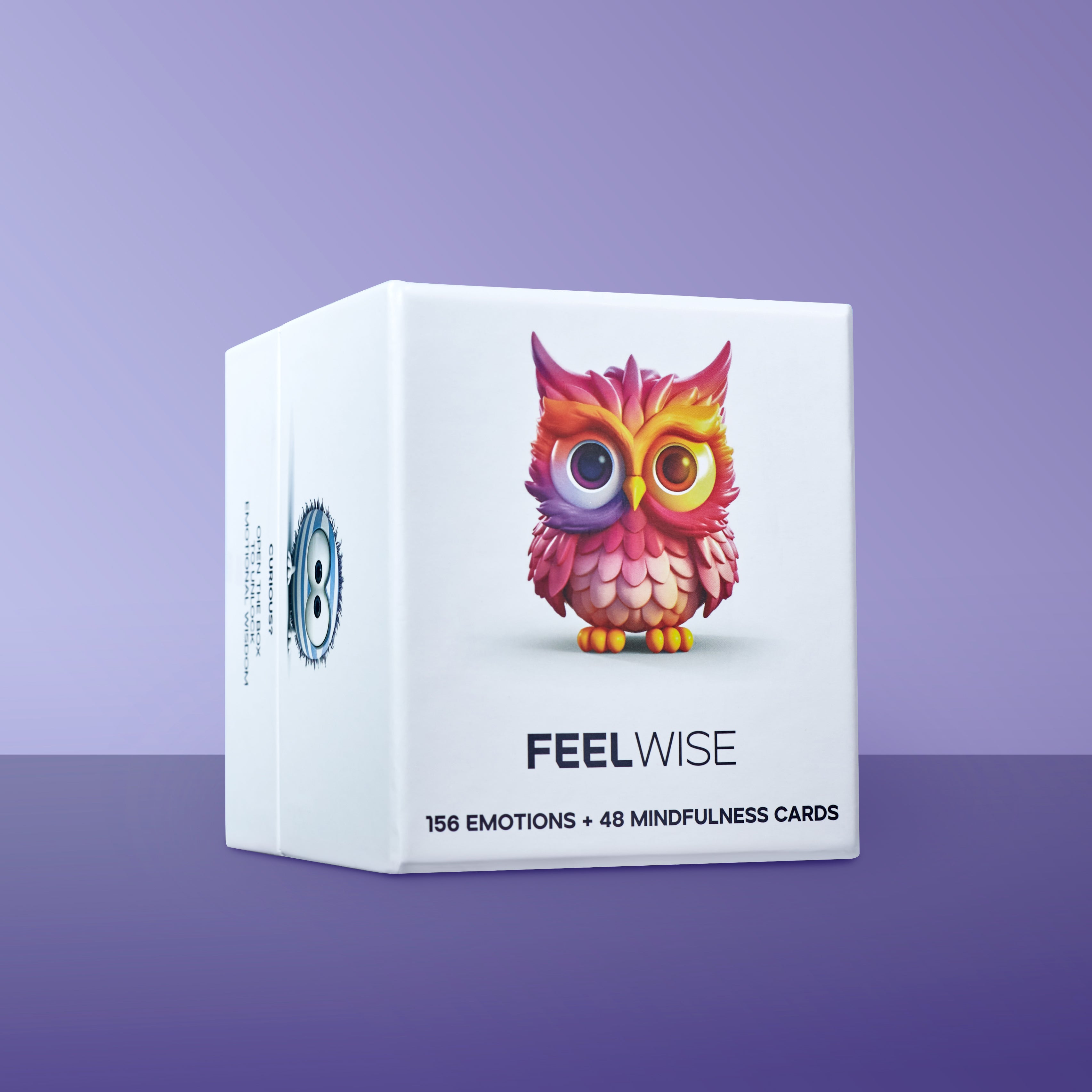



V3 "Pink Owl" 156 Emotions + 48 Mindfulness Cards Box on Sale
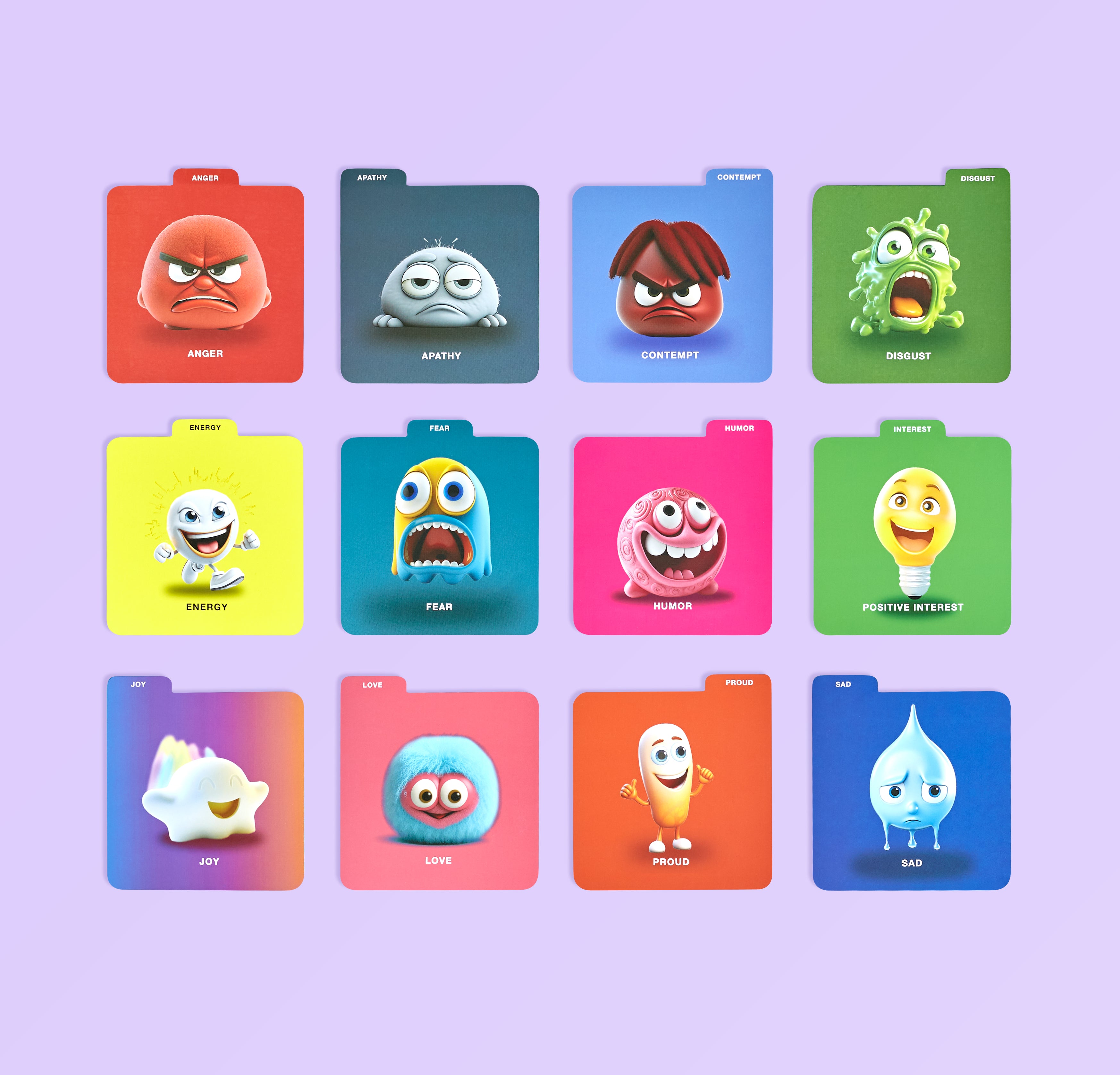
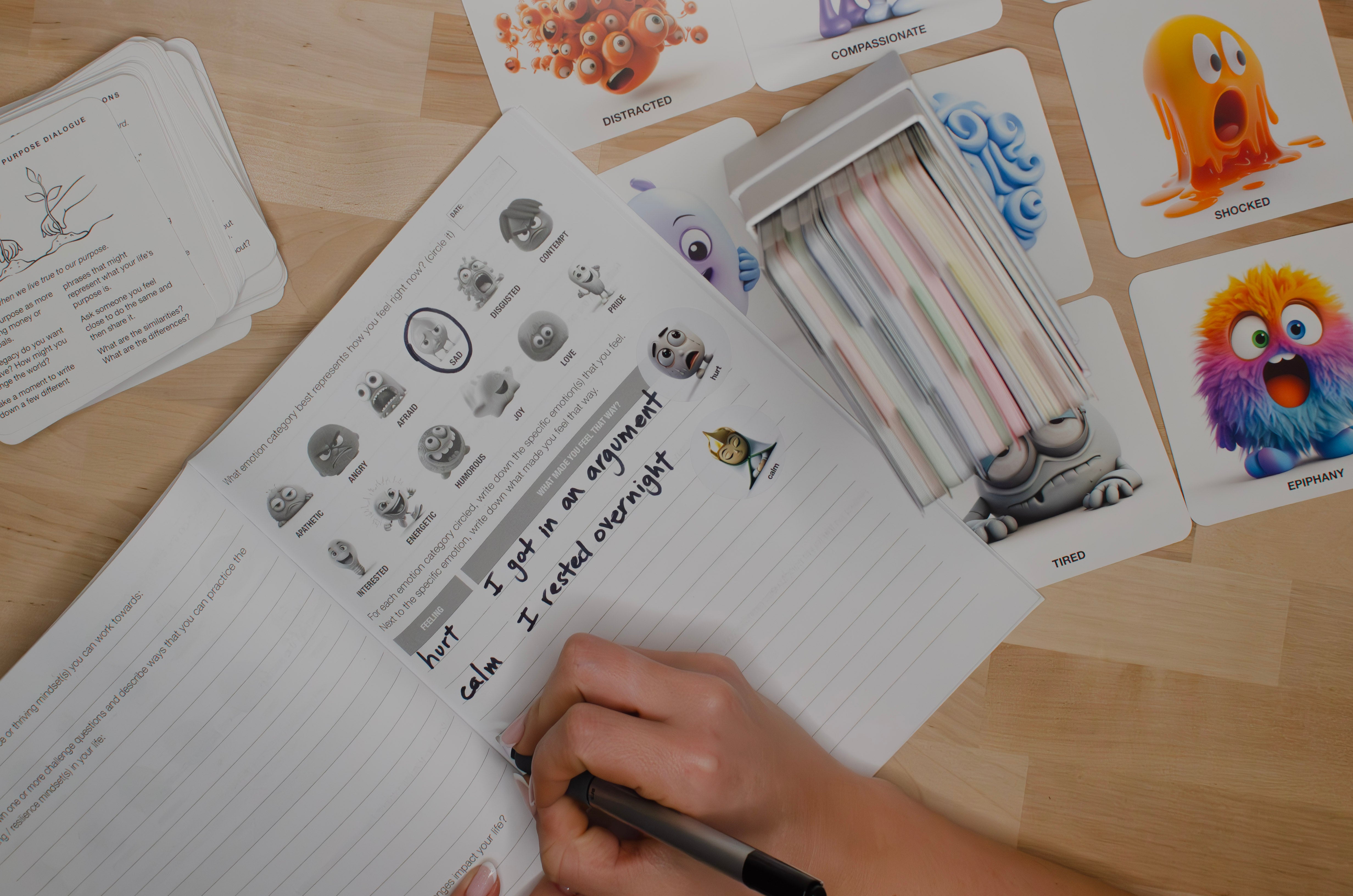
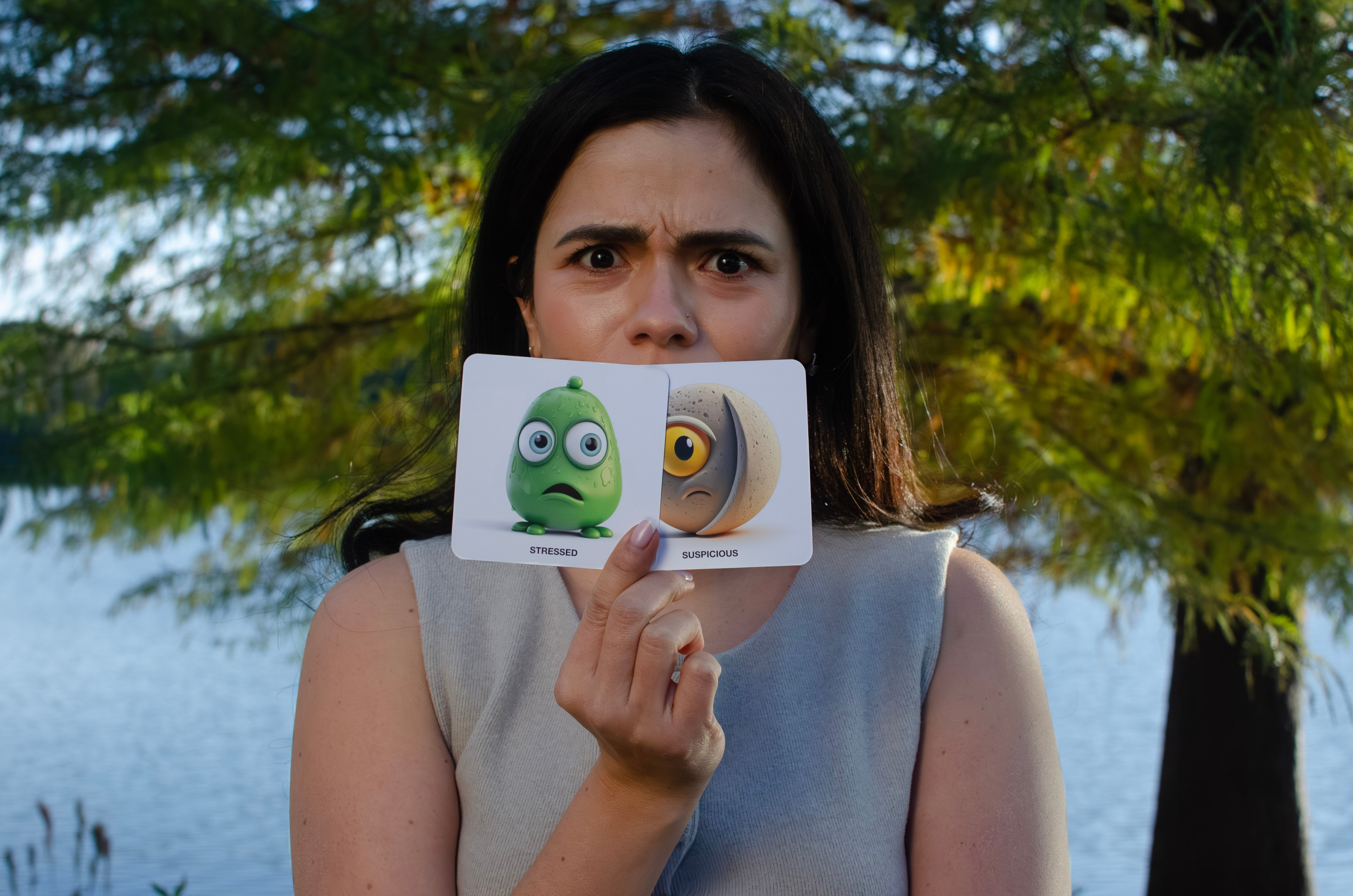
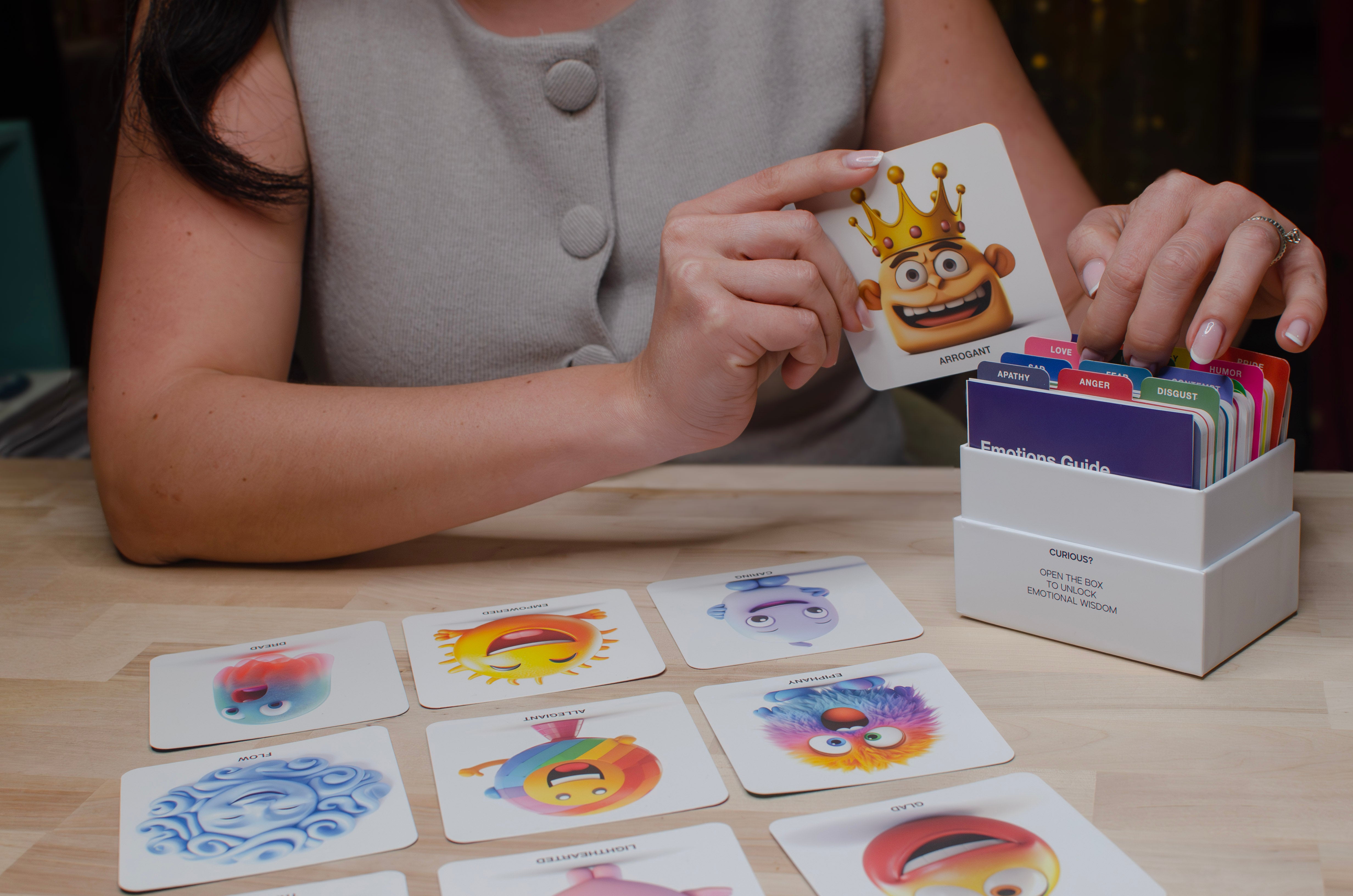
You get the full FeelWise system: 156 emotion cards, 48 mindfulness technique cards, emotion wheels, the journal, and stickers. This set helps you see your feelings, understand them, and choose simple steps to calm your body and your mind. It’s everything you need to build strong emotional skills at home, in class, or in therapy.
What’s Inside
-
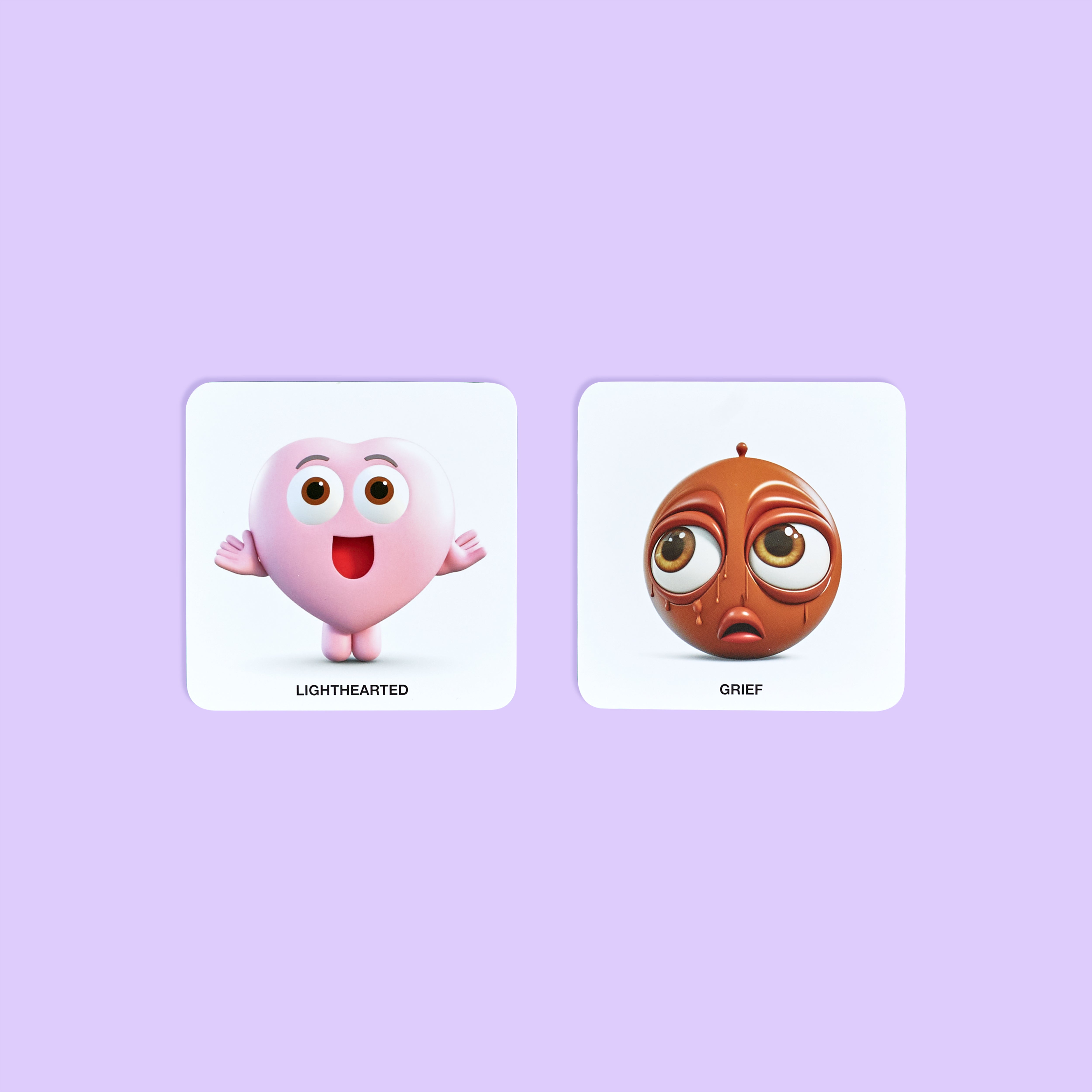
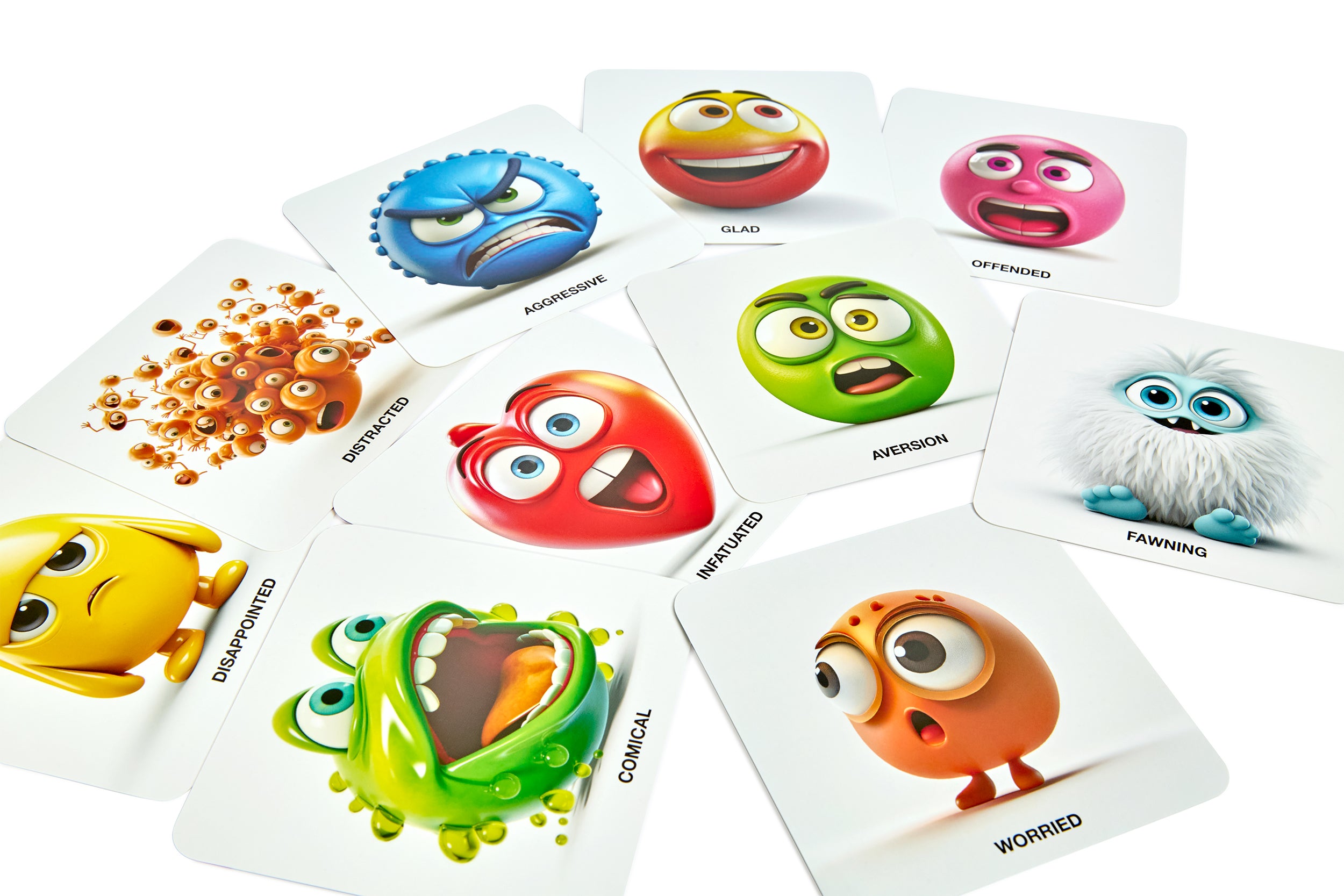
156 FeelWise emotion cards
-
48 mindfulness + regulation technique cards
-
Tabbed storage box
-
Quick-start guide for games and daily use
On sale while supplies last.
Pairs well with
In stock! Ships within 1-2 business days.
$5 Shipping
V3 "Pink Owl" 156 Emotions + 48 Mindfulness Cards Box on Sale
If you have any questions, you are always welcome to contact us. We'll get back to you as soon as possible, within 24 hours on weekdays.
-
Shipping Information
Use this text to answer questions in as much detail as possible for your customers.
-
Customer Support
Use this text to answer questions in as much detail as possible for your customers.
-
FAQ’s
Use this text to answer questions in as much detail as possible for your customers.
-
Contact Us
Use this text to answer questions in as much detail as possible for your customers.
What it Helps with
- Build strong emotional resilience over time
- Learn new skills that help you stay calm and focused
- Create stronger and more honest relationships
- Feel seen, understood, and validated for how you feel
- Connect real-life moments to your feelings
- See all the emotions you feel at once
- Understand your feelings in clear, simple detail
- Notice that your emotions are separate from who you are
- Use your emotions as clues about what you need
- Practice healthy ways to handle big or confusing feelings

How to Use

Step 1: Start
Start with something that happened
Think about a moment from your day that brought up feelings—big or small.
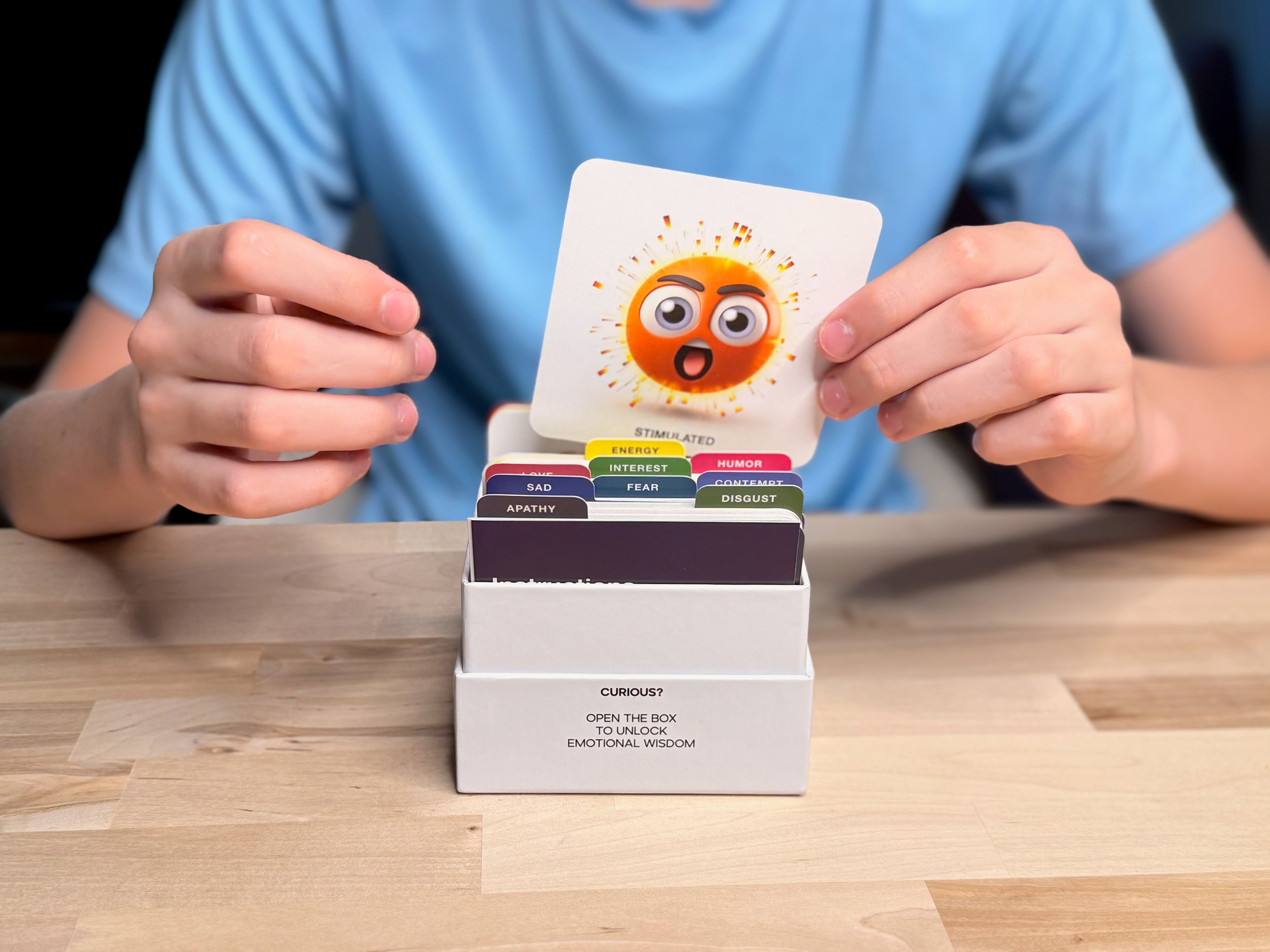
Step 2: Identify
Pick the emotion that fits
Look at the categories or cards and choose the feelings that match your experience.
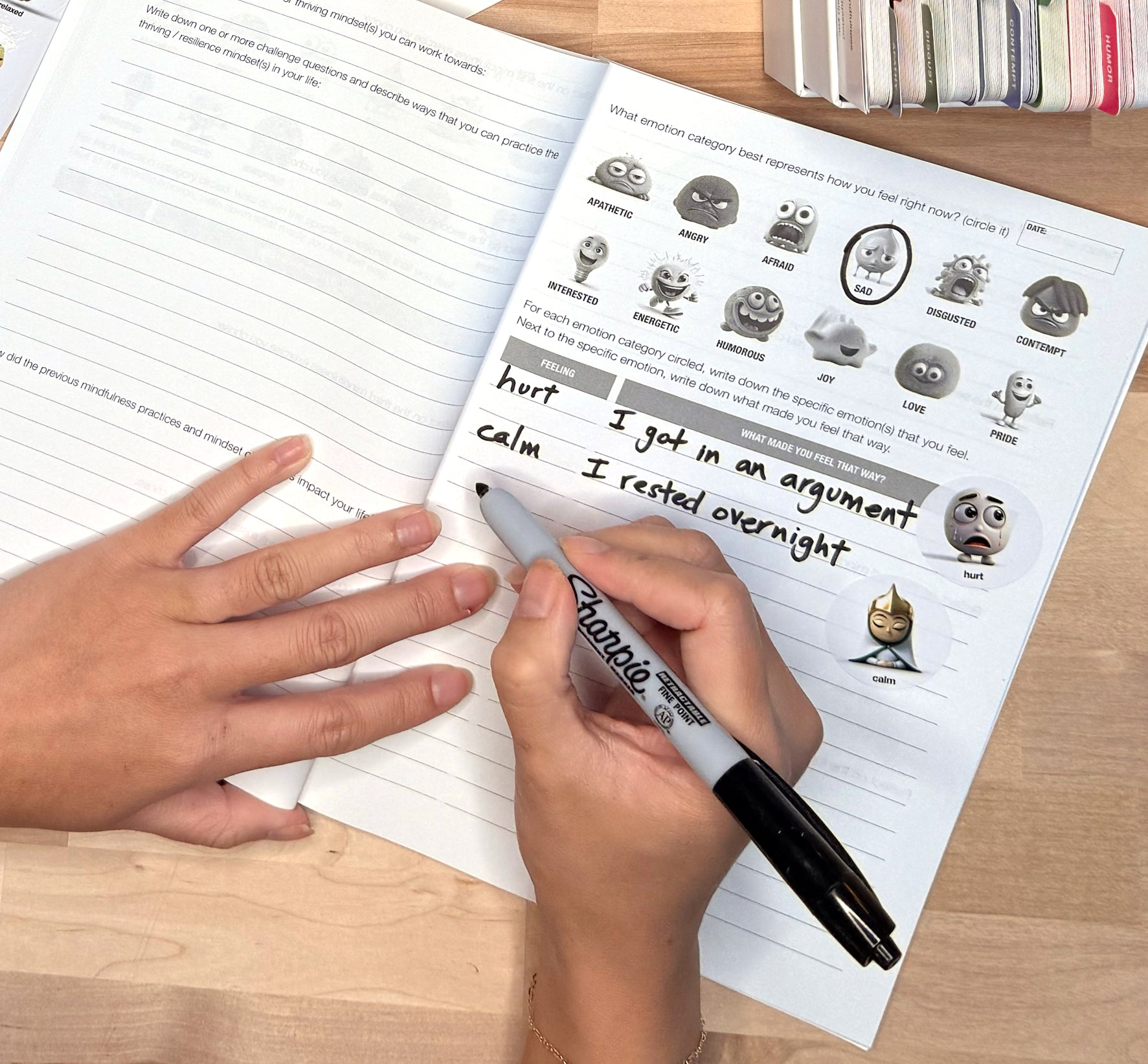
Step 3: Reflect
Think, talk, or write about your feelings
Write or share what happened, how you felt, and what you needed.
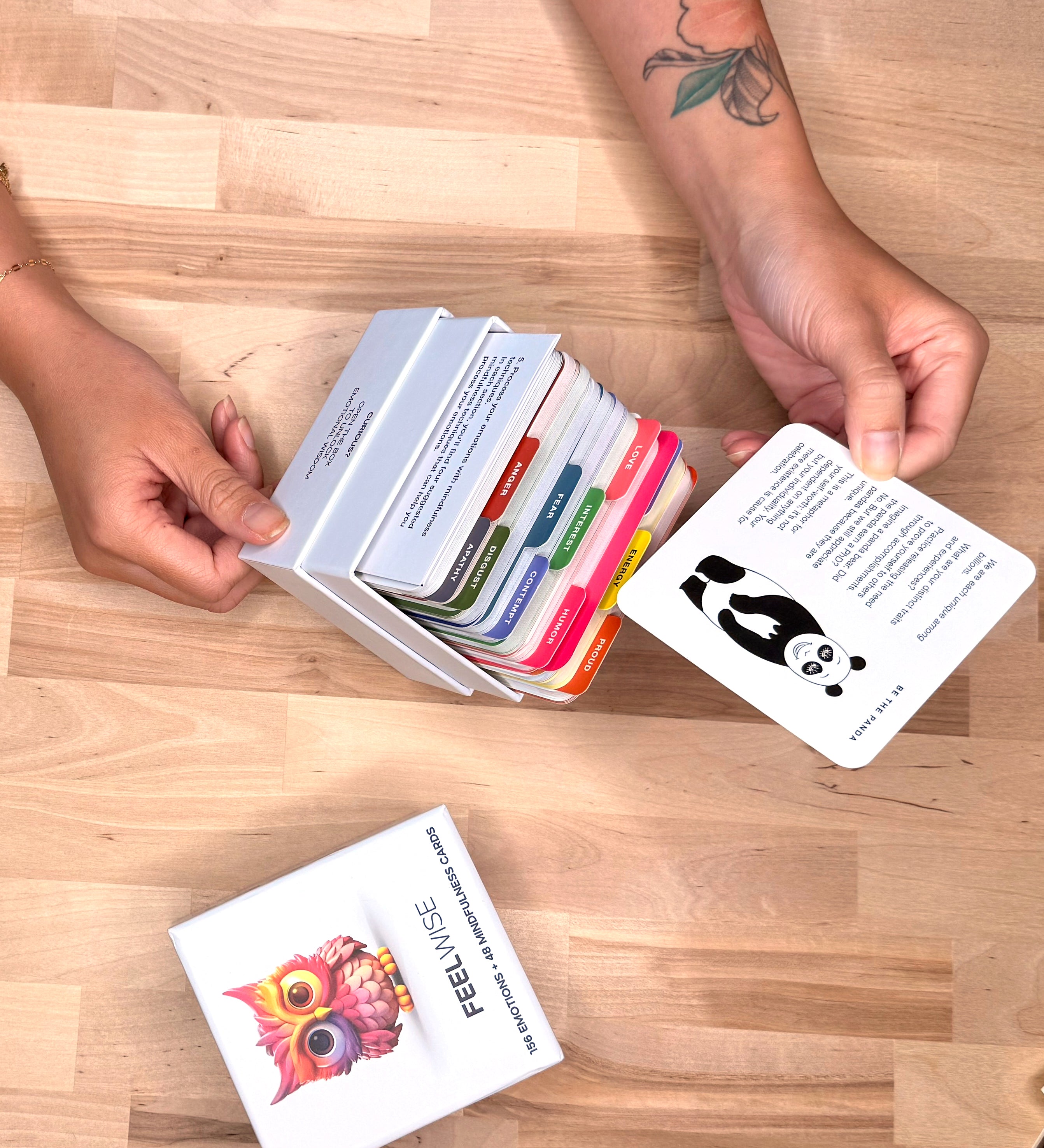
Step 4: Regulate
Try a simple technique that helps
Use a mindfulness technique to calm your body and settle your mind.

Step 5: Mindset
Use the mindset linked to your emotion family
Each emotion family has its own mindset—like hope, gratitude, openness, or compassion. Practice viewing the world through a new mindset lens.

Step 6: Connect
Use your emotional insight to understand others and grow your relationships
Share your feelings, listen to someone else, and notice what might be happening for them too.
Using the steps above helps you show care, communicate honestly, and build stronger, healthier connections with the people in your life.

Why it works
FeelWise uses real science about how the brain understands emotions.
- The pictures help your brain “see” a feeling faster.
- The techniques come from proven tools like CBT, DBT, innovation, and mindfulness, so you always know what to do next.
- It works because it turns big, confusing emotions into small, clear steps you can follow in real life.

Who its for
FeelWise is for families, therapists, schools, and company teams who want better ways to understand and talk about emotions.
It’s made for anyone who wants to build their “feelstack”—the set of emotions they feel about what happened—and use those insights to grow and connect.
FAQs
Please read our FAQs page to find out more.
How do I know which card to start with?
You can start anywhere. Think about something that happened, then look through the cards and pick the feelings that match. There is no wrong choice—your body and your brain will guide you toward the right cards.
Will this work for kids who struggle with talking about feelings?
Yes. Many kids—especially neurodivergent kids—find it easier to point to a picture than to find the right words. The images give them a safe, simple way to show how they feel without pressure.
Do I need training to use this with my family, class, or clients?
No training is needed. Each card and wheel is designed to be clear and easy to use. You can start right away with a game, a check-in, or a quick reflection about what happened.
Can I use this with groups, like in a classroom or therapy session?
Yes. FeelWise works very well in groups. You can use the wheels for class discussions, morning meetings, therapy groups, or team check-ins. The visuals help everyone stay on the same page.
What if someone feels more than one emotion at the same time?
That’s not just normal—it’s one of the biggest benefits of using FeelWise. Most of us don’t realize how many emotions we feel at once. FeelWise helps you see your full “feelstack,” so you can understand yourself better, make sense of what happened, and choose a healthier way to respond.