FAQ's
Welcome! We hope you can find answers here to commonly asked questions.
If you don't find an answer, please reach out and we'll reply to you within a day or two.
Shipping & Returns
Below are some common questions about shipping, returns, and exchanges
Do you ship internationally?
Yes. We ship to most countries. Shipping costs are shown at checkout, and delivery times vary depending on the destination.
How long does shipping take?
Most U.S. orders arrive in 3–7 business days. International orders usually take 10–21 business days, depending on customs.
Can I track my order?
Yes. You will receive a tracking number by email as soon as your order ships
What is your return policy?
We accept returns of unopened products within 30 days of delivery. If an item arrives damaged or incorrect, we’ll replace it at no cost. Contact us through our form if you need to return an unopened product. Unfortunately, we can't accept returns of opened products.
What should I do if my package is lost or damaged?
Contact us right away with your order number. We’ll help you solve the issue quickly.
Orders
Below are some of are common questions about orders
Can I change or cancel my order?
If your order has not shipped yet, we may be able to change or cancel it. Email us as soon as possible.
Do you offer bundles or bulk pricing?
Yes. We offer bundles on the site and custom quotes for schools, clinics, and organizations. Visit our Custom Order page for more details.
What forms of payment do you accept?
We accept major credit cards, Shop Pay, Apple Pay, Google Pay, and other standard Shopify payment options.
Will items in my order ship together?
Most orders ship together. If an item is on backorder, we may ship separately at no extra cost.
Do you offer gift options?
Yes. Contact us with your gift message and we'll print it out and include it in the order!
Products / Science
Below are some common questions about our products
What makes FeelWise different from other emotional tools?
FeelWise is hands-on, visual, and practical. Instead of reading long lessons or filling out worksheets, you use expressive images, simple steps, and real-life activities. This helps both kids and adults understand emotions in a natural, intuitive way.
Why does FeelWise use pictures of emotions?
Your brain reacts to pictures faster than words. Seeing an expressive face helps you recognize a feeling before you try to explain it. For many people—especially neurodivergent learners—images reduce pressure and make it easier to say, “Yes, this is how I feel.”
From a research standpoint, facial expressions are known to rapidly engage emotion-processing regions of the brain, making them powerful cues for affect recognition. PubMed
In addition, peer-reviewed work by Kaye & Schweiger (2023) shows that emoji-style symbols can validly capture in-the-moment mood states in ways that closely mirror standard mood scales, supporting the use of visual icons—like Feelies—as meaningful affective indicators. Edge Hill Research
Why are there 156 feelings? Do people really feel that many?
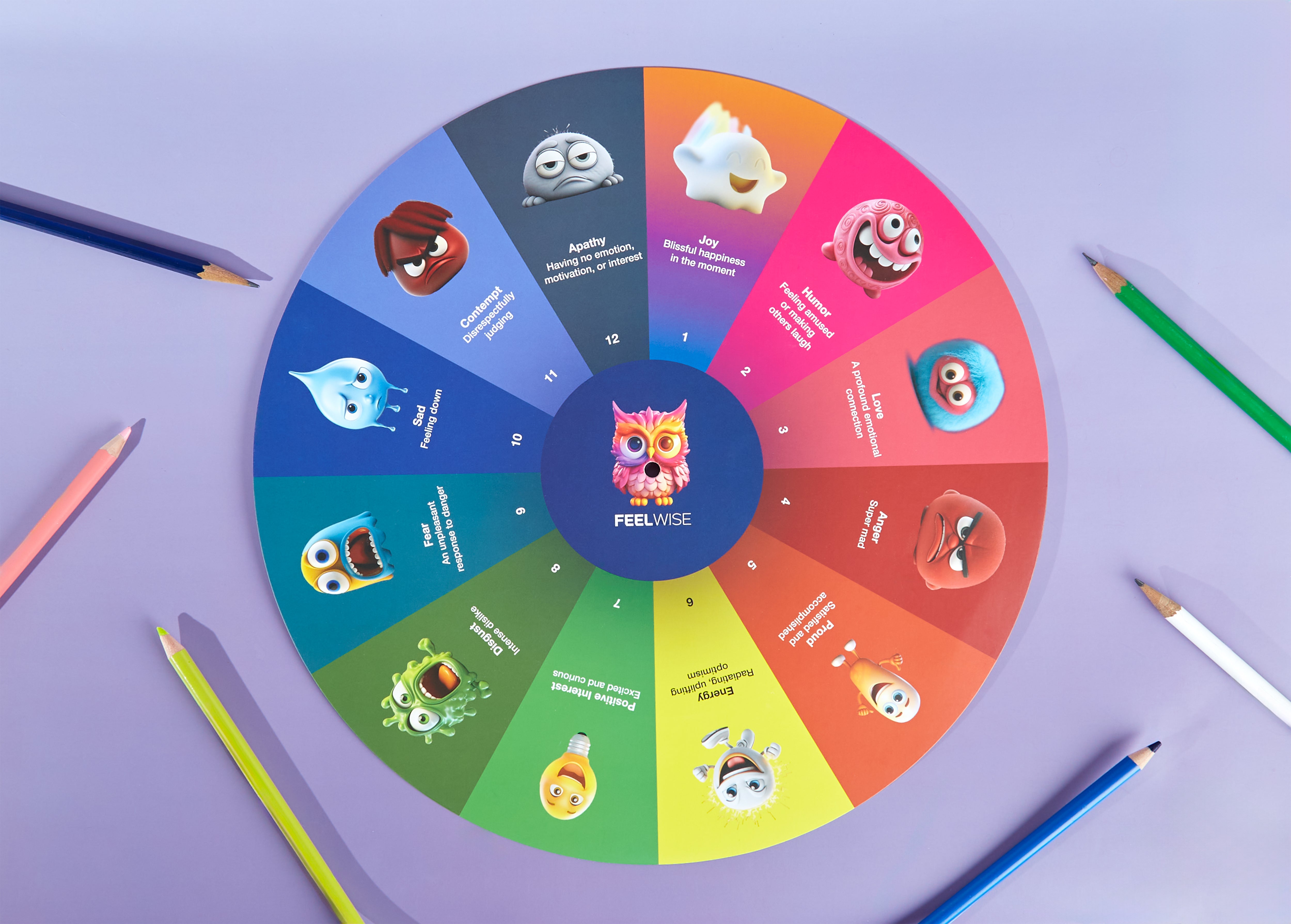
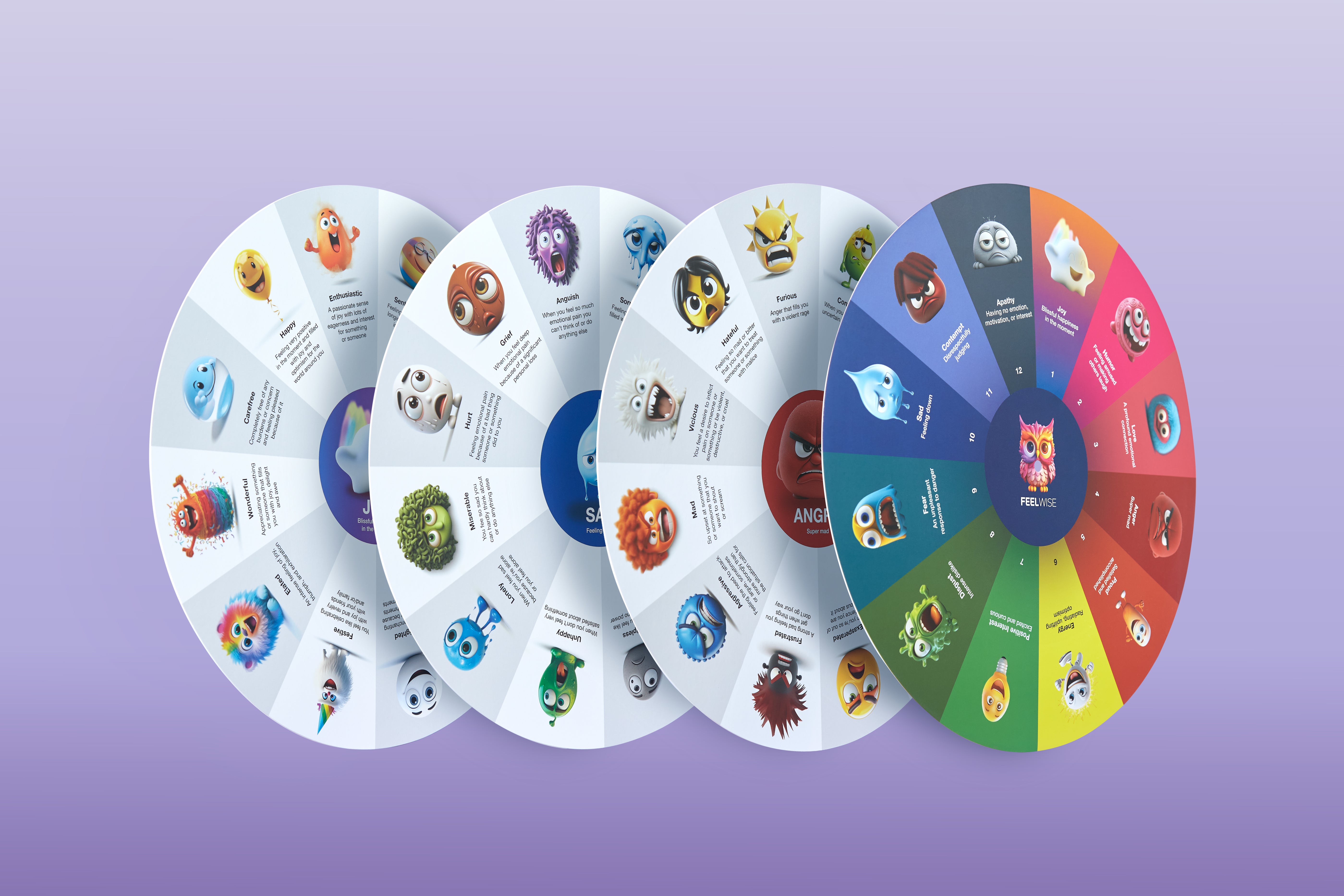
Yes. People often feel several emotions at the same time. FeelWise includes 156 emotions across 12 families so you can explore your full feelstack—the mix of emotions you feel about what happened. Most tools only offer 6–8 choices, which hides a lot of emotional nuance.
The extra detail helps you understand yourself in a deeper, more accurate way. Research on affect suggests that people experience rich, multidimensional emotional states rather than just a few basic feelings, so a broader vocabulary supports better self-awareness and regulation. OUCI
How does FeelWise help people understand their feelings?
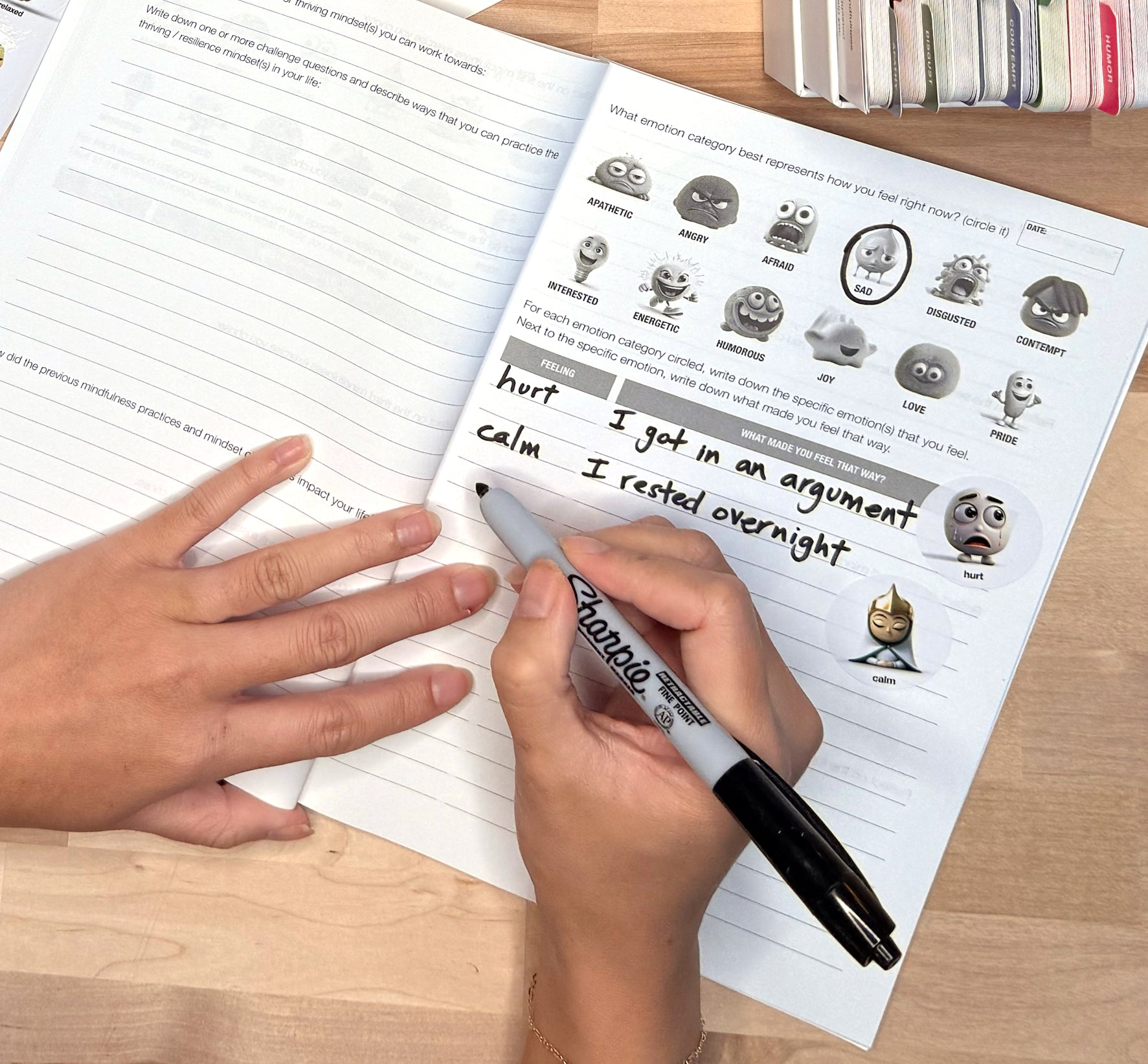
FeelWise guides you through a simple pattern:
- Think about something that happened.
- Pick the emotions that fit.
- Notice what your body is telling you.
- Learn what those emotions might mean.
This makes emotions easier to see, describe, and talk about—without needing perfect words.
Scientifically, this mirrors a process called affect labeling: when people put feelings into words, brain activity in threat centers like the amygdala decreases and regulation areas in the prefrontal cortex increase. In other words, naming emotions helps calm the nervous system and creates space for better choices. SAGE Journals+1
How does FeelWise support emotional regulation?
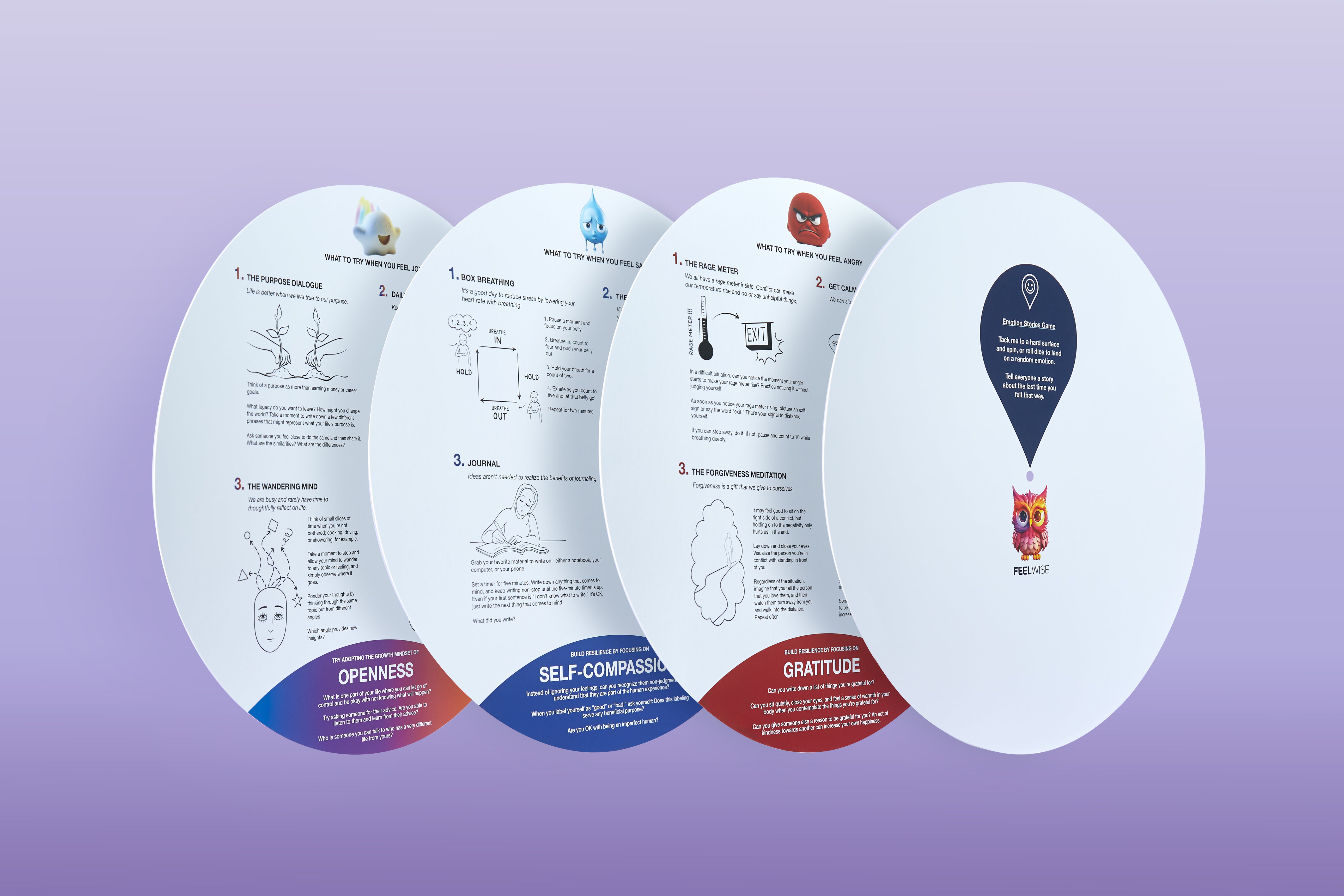
FeelWise includes short, clear steps from mindfulness, CBT, DBT, and grounding practices. These help calm your body, settle your mind, and build healthier ways to respond. The steps are easy to follow for children, teens, and adults.
Evidence-based approaches like cognitive behavior therapy (CBT), dialectical behavior therapy (DBT), and mindfulness-based stress reduction (MBSR) all show strong outcomes for improving emotional regulation and reducing distress. FeelWise translates these principles into simple, card-based actions you can use in everyday life. PMC
What are the “mindsets” in FeelWise?
Each emotion family has a recommended mindset—like hope, gratitude, curiosity, acceptance, compassion, or trust.
These mindsets help you look at what happened through a healthier, more balanced lens. Over time, this builds emotional resilience and makes it easier to grow from your experiences instead of getting stuck in them. Research from positive psychology shows that intentionally cultivating such mindsets can shift attention, meaning-making, and coping in ways that support long-term wellbeing.
Can FeelWise help people who struggle to talk about feelings?
Yes. Many users—kids, teens, adults, and neurodivergent individuals—find it easier to point to an emotion card than to explain feelings out loud. FeelWise removes the pressure to find the “right words” and gives you a simple, visual way to communicate.
Visual supports also reduce cognitive load, which can be especially helpful for people who process language differently or who become overwhelmed by verbal demands. npsyj.ru
Is FeelWise trauma-informed or safe for sensitive users?
FeelWise improves relationships because it teaches you to:
- understand what you feel,
- understand what someone else might feel, and
- communicate more clearly and kindly.
When you see your emotions and needs more clearly, connection becomes easier and more honest. Practicing emotional language and regulation skills is strongly linked in the literature to better interpersonal functioning and reduced conflict.
How does FeelWise help with relationships?
FeelWise improves relationships because it teaches you to:
- understand what you feel,
- understand what someone else might feel, and
- communicate more clearly and kindly.
When you see your emotions and needs more clearly, connection becomes easier and more honest. Practicing emotional language and regulation skills is strongly linked in the literature to better interpersonal functioning and reduced conflict.
Can adults use FeelWise too?
Absolutely. FeelWise is designed for all ages.
Families, teachers, therapists, counselors, coaches, and company teams use it to improve communication, emotional awareness, conflict resolution, and everyday wellbeing.
Do I need training to use FeelWise?
No. FeelWise is made so anyone can start right away. You simply:
- Think about what happened,
- Choose the emotions that match, and
- Use the simple steps on the cards or wheels to understand and regulate.
The tools are intuitive and grow with you over time.
How does FeelWise support neurodivergent users?
FeelWise is visual, concrete, and predictable—qualities that often help neurodivergent people communicate more easily. It removes the stress of “finding the right words” and makes space for pointing, choosing, and exploring at your own pace.
Research shows that visual supports can improve comprehension and expression for neurodivergent learners by providing structure and reducing processing load. npsyj.ru
Can I use FeelWise in therapy or education?
Yes. Therapists use FeelWise for check-ins, emotional exploration, regulation practice, and communication.
Schools use it for SEL lessons, morning meetings, conflict repair, and student support.
Teams use it for communication, leadership, and trust-building.
Because the tools are non-clinical in appearance but grounded in evidence-based concepts, they adapt well to many professional settings.
Is FeelWise based on real emotional science?
Yes. FeelWise draws from several well-established areas of research:
- Neuroscience – how the brain processes and regulates emotion. PubMed+1
- Mindfulness research – how attention and body awareness reduce stress and improve coping. Wikipedia+1
- CBT and DBT – how thoughts, behaviors, and skills like distress tolerance shape emotional outcomes. PMC+2Cincinnati State Online Bookstore+2
- Visual cognition and affect labeling – how images and naming feelings change brain activity and support regulation. Edge Hill Research+1
FeelWise packages these insights into simple, visual tools that people can actually use outside of a lab or clinic.
What kind of growth can FeelWise help with?
With regular practice, FeelWise helps you:
- notice emotions faster
- understand them more clearly
- regulate your body and reactions
- choose healthier responses
- build resilient mindsets
- deepen your relationships
- feel more confident and seen
It’s emotional learning you can actually use in real life—not just theory.
Are the Feelie images made by AI?
The Feelies were created with AI assist, but they are not purely AI-generated and not taken straight from an AI tool. Each character has been hand-edited, refined, customized, and polished by human artists. Humans were paid for this work, and the final art is copyrighted.
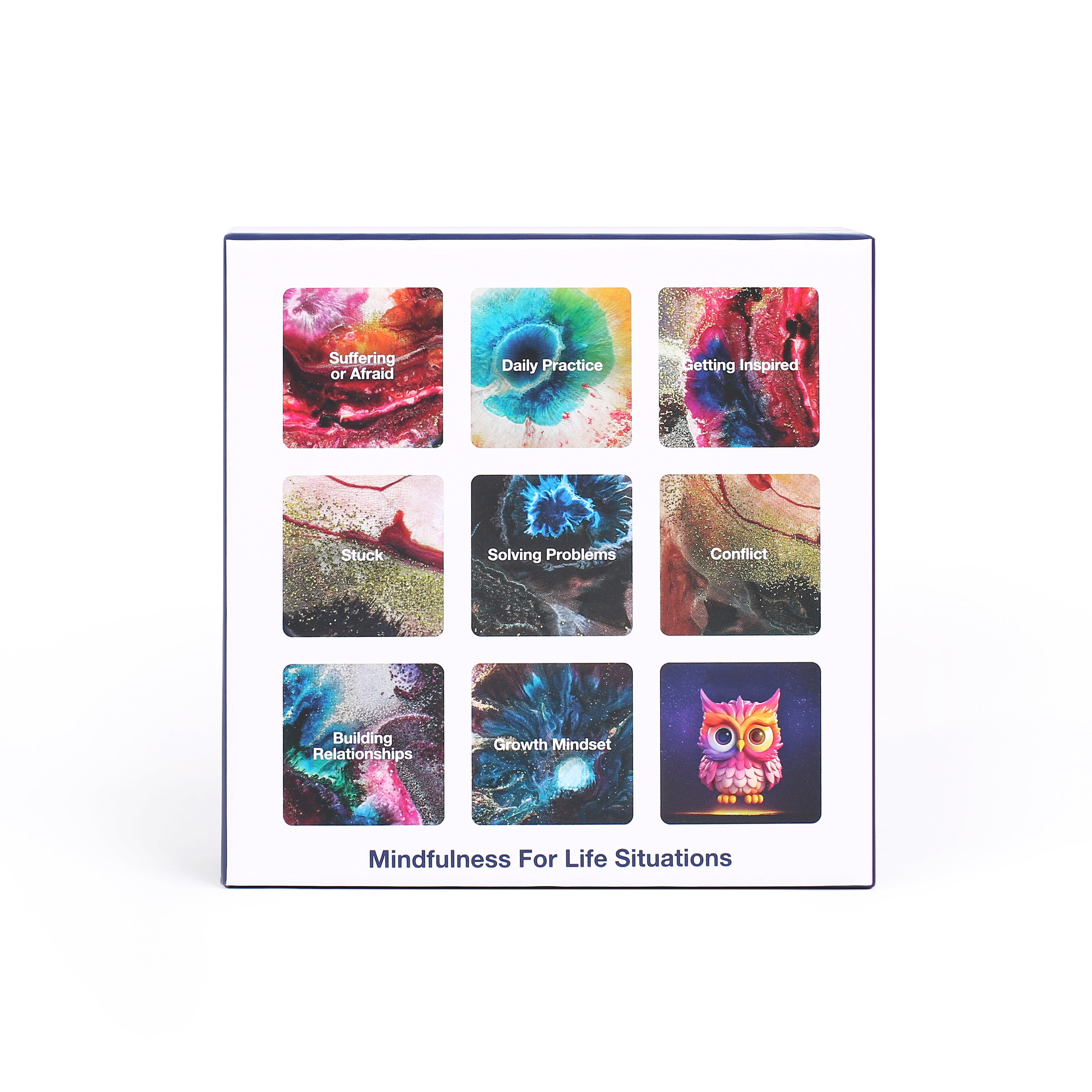
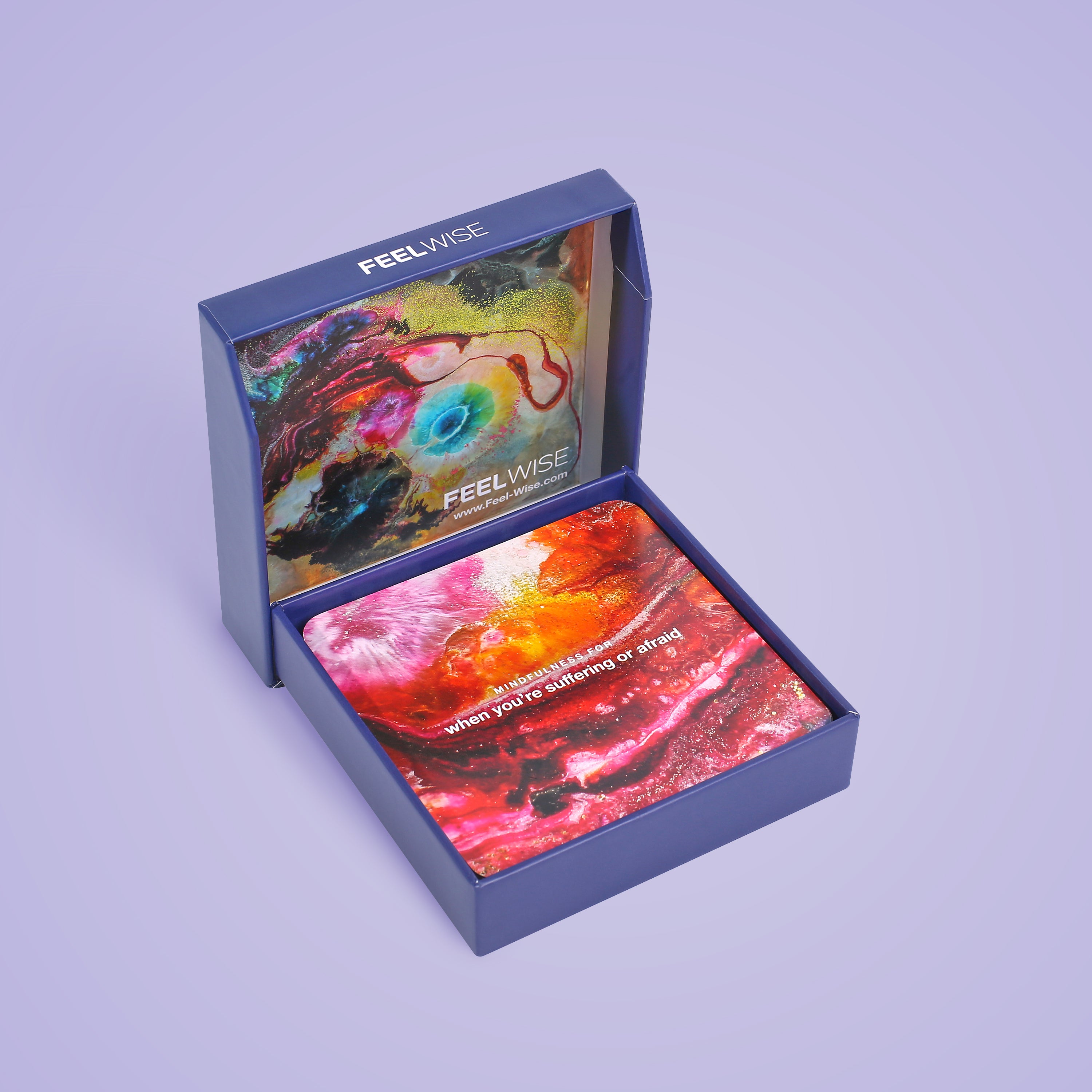
We also use fully human-created artwork in the Mindfulness for Life Situations deck and on the product boxes.
We chose AI assist because creating 156 expressive characters that truly embody emotions would be nearly impossible for a single artist or small team to complete at scale. AI helped generate starting points, but the emotion design, expression choices, color work, adjustments, and final look were shaped by people.
Our commitment is simple:Use technology responsibly without replacing human creativity or labor.
Featured collection


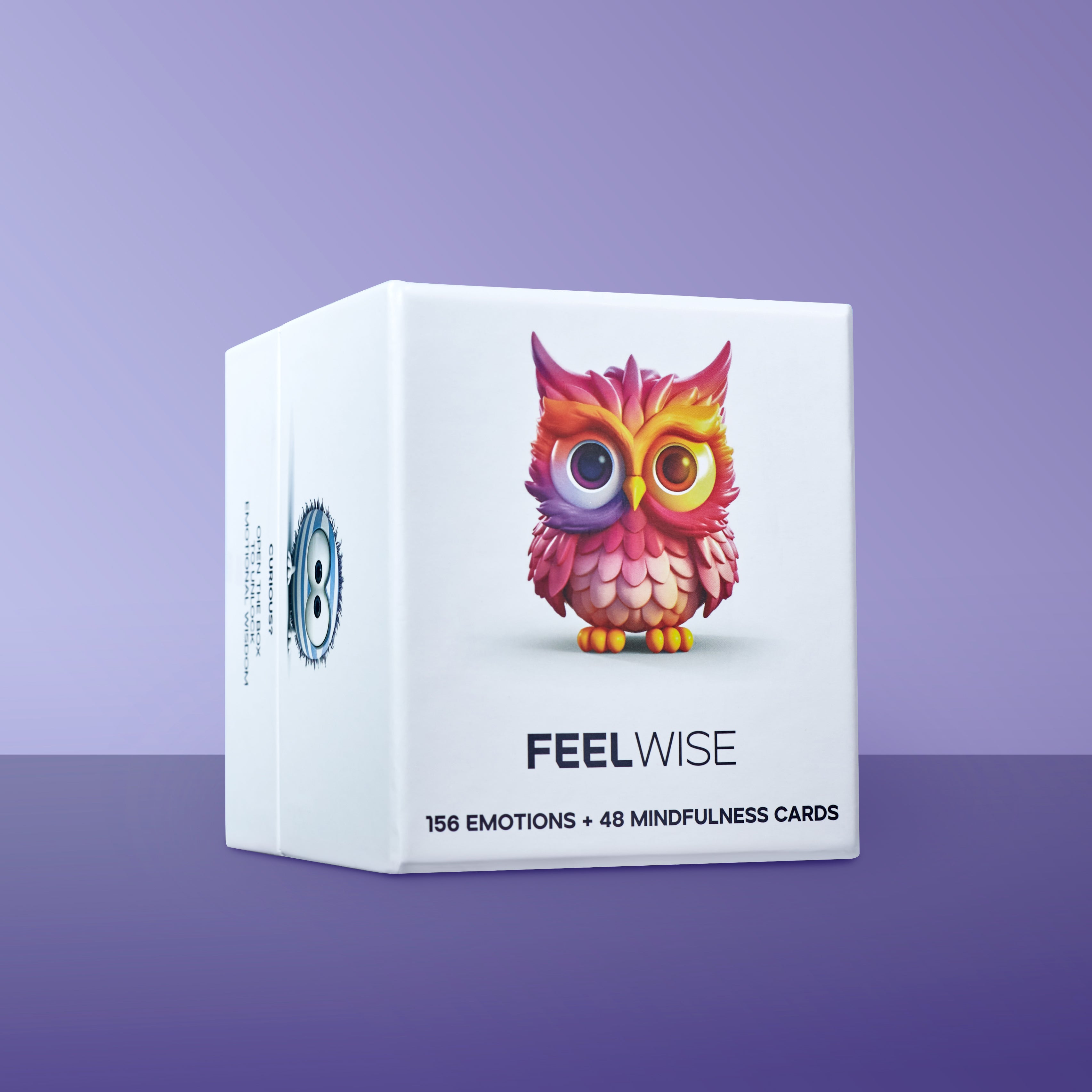
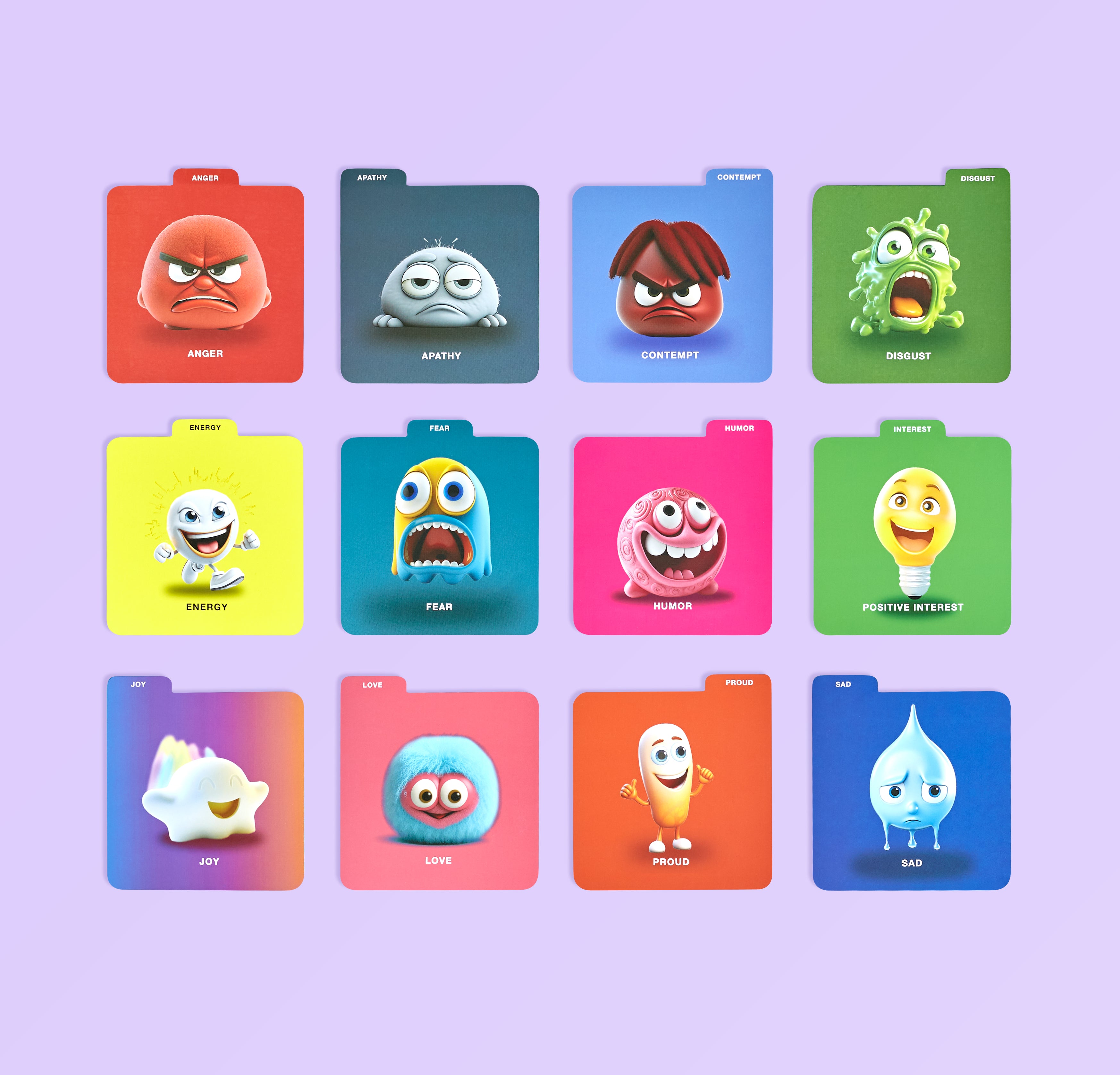
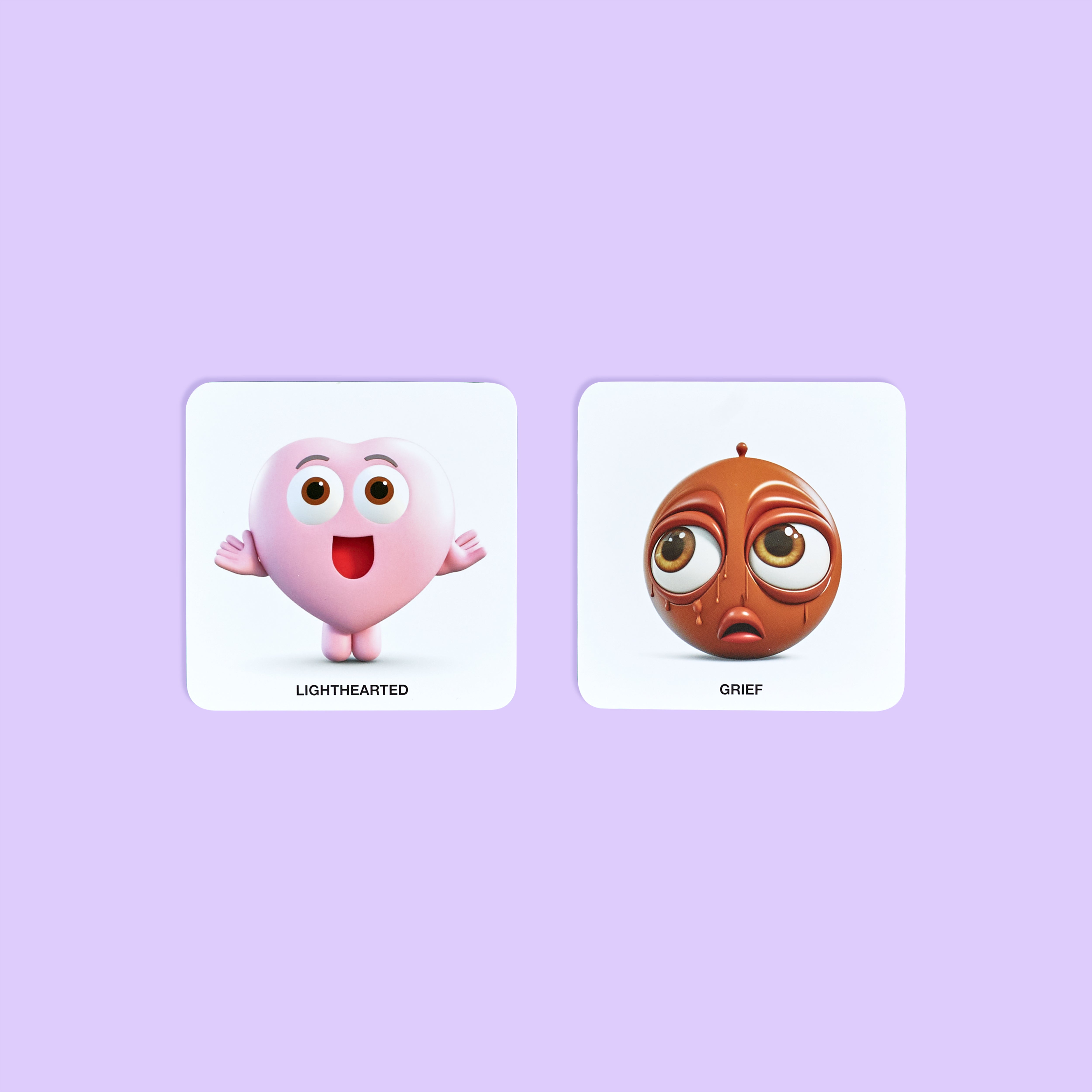

V3 "Pink Owl" 156 Emotions + 48 Mindfulness Cards Box on Sale

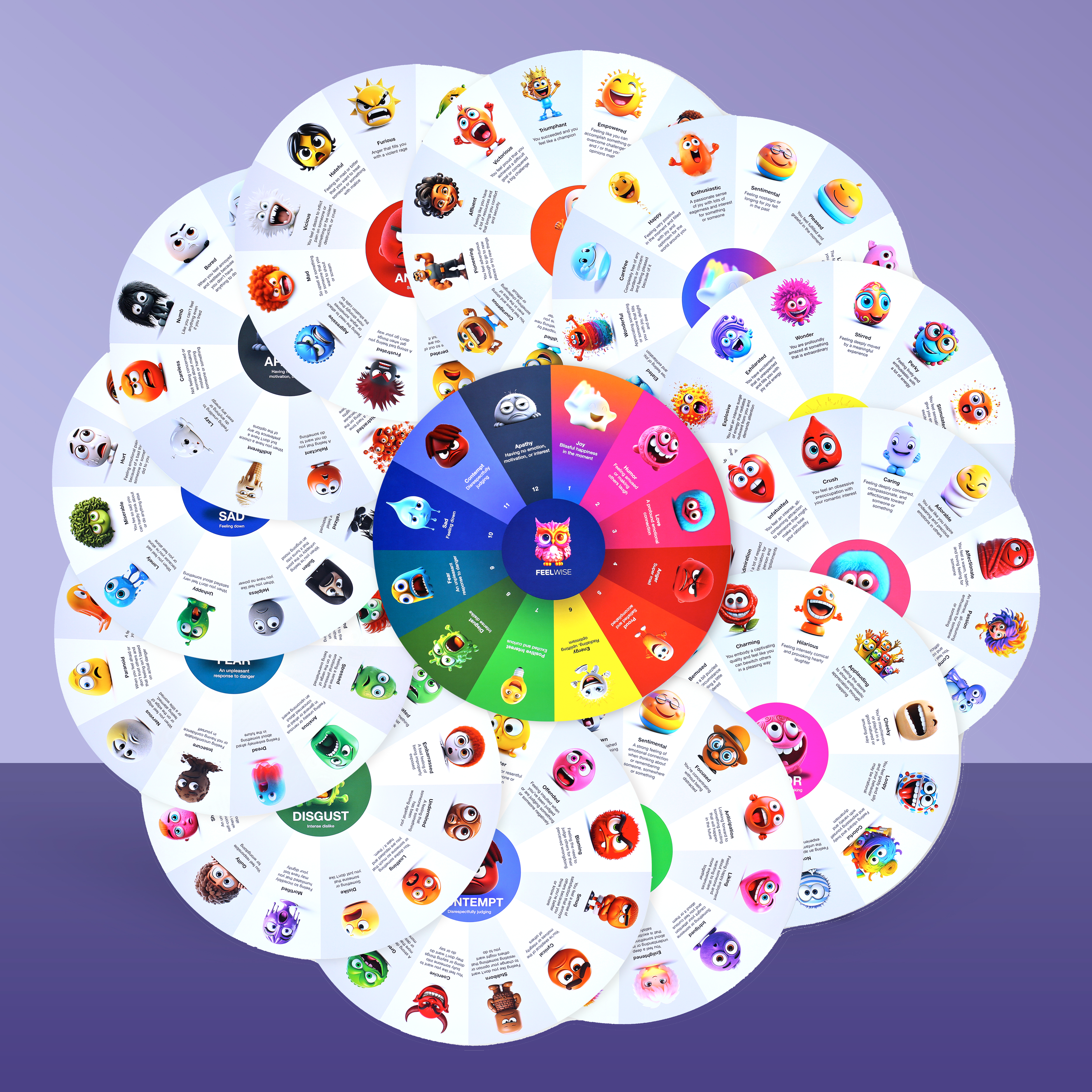

"13 Wheels" Super EQ Kit On Sale